Delphin Vacuum vs Robot Vacuums: Rivals or the Perfect Team for Your Home?
The modern dilemma: Time versus real hygiene
When we think about keeping our home spotless, we usually debate between autonomous technology and traditional high-performance systems. The arrival of smart devices has transformed our routines, promising crumb-free floors without us having to lift a single finger. However, those who live with pets, small children, or family members with respiratory sensitivity know perfectly well that the reality is much more complex than a seemingly clear floor.
True home hygiene is not only measured by what we see at first glance, but by the quality of the air we breathe and the depth of cleaning on textile surfaces. This is where the great debate arises over whether to delegate all responsibility to an autonomous device, no matter how advanced it is, or to bet on a comprehensive system that guarantees the elimination of allergens.
The answer does not have to be an exclusive choice. In fact, understanding the strengths and limitations of each technology allows us to create a perfect maintenance ecosystem. Let's break down how different approaches can work together harmoniously to transform your house into a truly safe, purified refuge free of irritating agents.
The convenience of daily maintenance versus deep cleaning
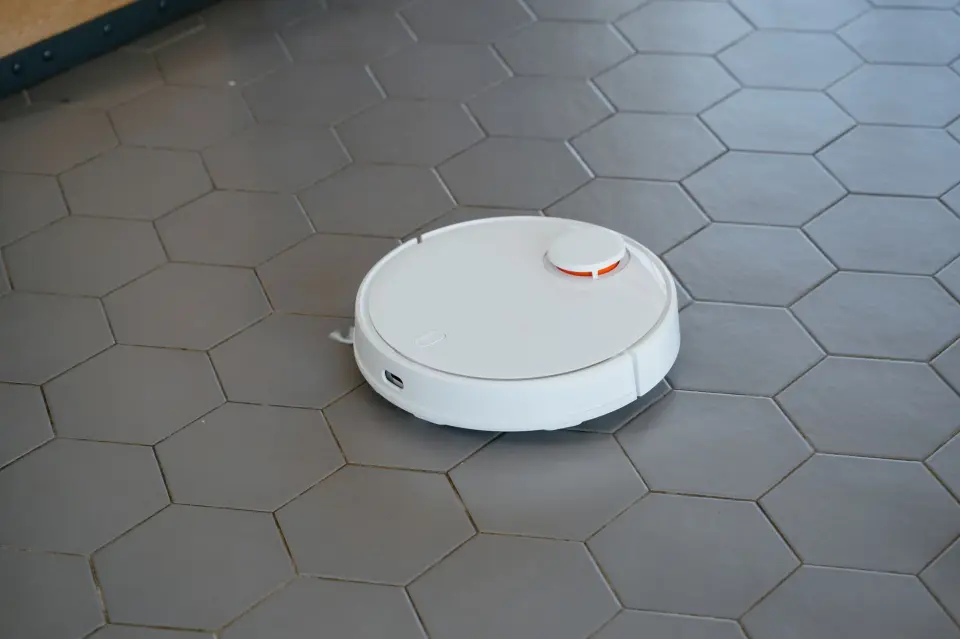
Autonomous cleaning devices have earned their place in our homes for a very simple and powerful reason: they give us time. Scheduling a route from our mobile phone while we are at the office or letting the device pick up the remains of dinner in the kitchen is an undeniable advantage. They are excellent allies for managing superficial day-to-day dirt, such as loose lint, cat litter, or breadcrumbs under the dining table.
However, their compact design imposes insurmountable physical limitations. To navigate under furniture and dodge obstacles with agility, these devices feature small motors that offer limited suction power. This power is sufficient for sweeping hard floors, but it is completely inadequate when facing medium or long-pile carpets, where dirt, dust mites, and organic debris embed themselves in the base of the fabric, clinging to the fibers with a force that a battery-powered motor simply cannot overcome.
Furthermore, the mechanics of these devices often involve side brushes that spin at high speed. While they are effective at bringing dirt closer to the central channel, they also have the side effect of hitting and lifting the finest dust particles into the air. For a person without respiratory problems, this may go unnoticed, but for someone with asthma, it means that the irritants that were sitting quietly on the floor are now floating at the level of their airways.
Why families with allergies need more than automation

Living with rhinitis, asthma, or reactions to animal dander requires a much more rigorous hygiene strategy than simply keeping the parquet shiny. The triggers for these conditions are microscopic and have a habit of hiding in the most difficult places. An autonomous device travels the two-dimensional plane of the floor, but dust is three-dimensional. It settles on baseboards, on door frames, on bookshelves, and, most critically, it becomes suspended in the environment every time we walk, shake a garment, or open a window.
The Achilles heel of the vast majority of compact systems lies in their filters. As they collect dirt, the tiny pores of their paper, cloth, or HEPA filters become progressively clogged. This drastically reduces their already limited suction capacity within a few minutes of starting work. Worse still, the air the motor needs to expel to avoid overheating usually carries microparticles with it that the saturated filter could not retain, returning a fine, imperceptible, but highly irritating mist to the environment.
The ultimate solution to this endless cycle of recirculated dust is to eliminate traditional dry filters from the equation. By using natural water as a dust-trapping barrier, advanced equipment like the delphin t8 ensures that wet dirt cannot fly under any circumstances. Every particle, from the thickest dog hair to the most microscopic spring pollen, gets trapped in a liquid whirlpool. This guarantees that the retention flow remains constant from the first to the last minute, offering real, immediate, and measurable relief for the lungs of your entire family.
The challenge of pet hair and lingering odors
Those who share their lives with dogs or cats know perfectly well the daily challenge of keeping animal hair and body odors at bay. Pets constantly shed their fur, and these fine filaments have the incredible ability to weave themselves into carpet weaves, cling statically to baseboards, and float into the darkest corners. The rubber or bristle rollers of automated devices often quickly tangle with these hairs, requiring tedious manual maintenance by the user, which largely negates their promise of independence.
Beyond visible hair, the real problem for allergy sufferers is animal dander and the proteins present in the saliva and urine of our pets. When a dog licks its paws and then rubs against the sofa, those proteins dry up and become minuscule particles that flake off at the slightest touch. A superficial device will only spread these allergens around the room. Massive extraction power and continuous beating are needed to tear these particles from the textile fibers before they pass into the air we breathe daily.
To this, we must add that pet odors tend to deeply permeate the environment. Traditional dry bins, by accumulating hair and dander for days, often become a source of bad odor themselves, expelling an unmistakable scent of wet dog or stale dust every time they start their cycle. By using a system that traps absolutely everything in a liquid medium, odors are neutralized instantly. The dirty water is simply flushed down the toilet when the task is finished, taking with it any trace of bad smell and leaving the house with a fresh fragrance.
The role of indoor air: Vacuuming the floor vs washing the environment

There is a widespread belief that pollution is an exclusive problem of large cities and their traffic-filled avenues. However, scientific studies repeatedly show that the air inside our homes can be up to five times more stale than outside. We spend most of our lives indoors, sharing scarce oxygen with volatile organic compounds emitted by furniture, mold spores from bathrooms, pet dander, and tons of accumulated household dust.
A device that merely skims the floor does absolutely nothing to improve this environmental quality; in fact, in many cases, it worsens it by stirring up thermal currents at ground level. To truly purify a home, we need to treat the air itself, not just the surface we walk on. This is where the concept of traditional cleaning falls short and the revolutionary idea of washing the air comes into play, imitating the exact process that nature itself uses when it rains and cleans the atmosphere, leaving that characteristic smell of wet earth and freshness.
A high-end system based on water filtration acts literally as an artificial lung for your house. While you run the brush over any surface, the equipment is absorbing hundreds of liters of stale air per minute, centrifuging them in its water tank and returning them to the room completely clean, oxygenated, and renewed. You can even take advantage of this flow to add a few drops of pure essential oils to the water, ensuring that, while you remove physical dirt, you distribute a balsamic aroma of eucalyptus or lavender that makes breathing easier during the night.
Mattresses, sofas, and curtains: Forbidden territories for automation
If we objectively analyze where we actually spend our time when we are at home, we will discover that the floor is the surface that has the least direct contact with our skin and respiratory tracts. We spend about eight hours a day breathing just a few inches from our mattress and pillow, and we enjoy our leisure time lying on the sofa cushions. Ironically, these are the great forgotten ones in automated cleaning routines, for the simple reason that rolling machines cannot climb walls or clean plush upholstery.
Mattresses are, by nature, the perfect ecosystem for the proliferation of dust mites. We provide them with constant body heat, moisture through nocturnal perspiration, and an inexhaustible food supply in the form of dead skin flakes. A mattress that does not receive regular deep maintenance can harbor millions of these microorganisms, along with their droppings, which are the real culprits behind morning allergic reactions, dry coughs, nasal congestion, and itchy eyes upon waking.
To sanitize these critical resting areas, a specialized tool equipped with an electric beater that generates deep vibrations is imperatively required. This mechanical action is strictly necessary to dislodge dirt embedded several inches deep in the core of the mattress or the foam of the sofa, so that high-power suction can then permanently extract it. Seeing the dark, murky color of the water after performing this process on a seemingly clean bed is an eye-opening experience that forever changes our perception of what true cleanliness means.
Combined cleaning strategy: How to get the most out of both worlds
Far from being irreconcilable enemies, these two cleaning philosophies can form an unbeatable alliance in your home. The key to success lies in delegating the right tasks to the right equipment, without asking for the impossible. We can think of the small autonomous device as the janitor in charge of daily preventive maintenance, and the powerful water filtration system as the team of specialists in deep and comprehensive disinfection. Together, they optimize your free time without compromising the health of your loved ones at all.
A highly effective and balanced weekly routine could consist of scheduling the autonomous device to go over high-traffic areas, such as the kitchen after meals, the main hallway, and the entryway, during weekdays. This will keep visible lint and surface dirt that we bring in on our shoes while working or resting at bay. Then, on Saturday morning, your water vacuum steps in to do the heavy and irreplaceable work: extracting embedded sand from carpets, purifying the air in closed bedrooms, cleaning static dust from tall furniture, and disinfecting the upholstery where pets sit.
By adopting this hybrid and smart approach, you significantly prolong the lifespan of your precious carpets and upholstered furniture, drastically reduce the viral and bacterial load in the environment, and above all, free up your mental schedule. You know for sure that the floor is presentable to receive a surprise visit any day of the week, but you also have the absolute peace of mind that your home is deeply sanitized at a microscopic level, creating a shielded environment where allergies simply have no space or resources to proliferate.
The smart investment in durability and family well-being
When evaluating how to equip our home for the future, it is vital to look far beyond the initial price tag and analyze the true long-term value. Autonomous electronic devices, due to their extreme dependence on degrading lithium batteries, delicate optical sensors, and miniaturized moving parts, often have a relatively short lifespan. They frequently require costly out-of-warranty repairs or complete replacements every three or four years, becoming a recurring and hidden expense for the family economy.
Conversely, a high-end comprehensive purification and cleaning system is built under industrial engineering standards specifically designed to last for decades without losing an ounce of its original strength. By not relying on expensive disposable filters or synthetic paper bags that must be constantly purchased, the monthly maintenance cost is literally reduced to a few liters of tap water. Furthermore, this type of equipment unifies multiple appliances into one: it acts as a medical-grade air purifier, professional mattress cleaner, wet stain extractor, and blower, maximizing space in your closets and your financial investment.
At the end of the day, deciding how to care for our most intimate environment is a fundamental decision about our daily quality of life. Creating a pollutant-free sanctuary is priceless when it comes to guaranteeing the deep rest of our children and safeguarding the long-term health of our pets. Combining the undeniable practicality of daily robotic technology with the absolute and irreplaceable power of water purification is, without a doubt, the smartest strategy for those who do not settle for half measures when it comes to protecting their family's well-being.
Frequently Asked Questions
Can a robot vacuum completely replace a water cleaning system?
No. Robots are excellent for picking up crumbs and superficial lint from the floor daily, but they lack the power and necessary tools to clean mattresses, sofas, deep carpets, or purify the air from allergens and dust mites.
Is it a good idea to use the robot during the week and the water system on weekends?
It is the ideal strategy. The robot keeps hard floors presentable from Monday to Friday, saving you time, while the water filtration system performs deep sanitization of textiles and air purification over the weekend.
Why does the robot vacuum kick up dust as it passes?
This happens for two reasons: its side brushes spin quickly, knocking fine particles into the air, and dry filters (by saturating quickly) allow the motor's exhaust air to return micro-dust to the environment.
How does the exclusive use of cleaning robots affect allergy sufferers?
By not washing the air or extracting dust mites from mattresses and upholstery, allergens remain present in the home. The robot's movement can even keep these particles in suspension, worsening respiratory symptoms.
What economic advantage does combining both systems have?
By using the water system for the heavy work, the robot suffers less wear on its motors and rollers. In turn, you invest in water equipment that lasts for decades, avoiding having to buy separate air purifiers or upholstery cleaners.